
Criteria for Volunteer Service

The activity needs to:

– relate to Montana’s natural or environmental cultural history

– occur in Montana unless you live out of state

– be sponsored by an organization

– be unpaid


Each volunteer service activity may fit under one of these categories:  Citizen Science, Stewardship, Education, Organizational Support, Other.
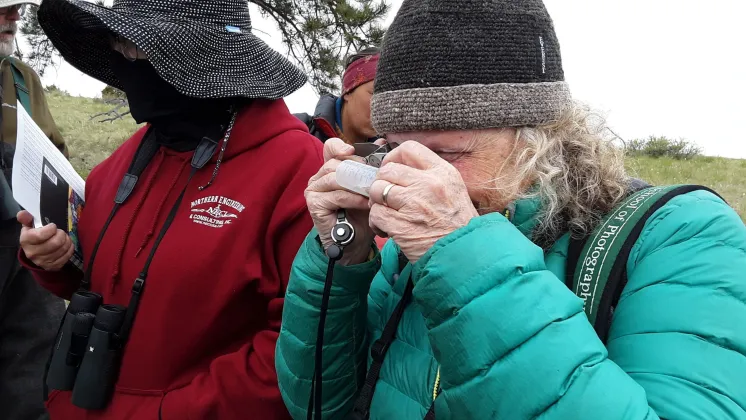
Citizen Science

Citizen Science involves volunteers assisting with scientific research.  These projects usually involve gathering data and returning it to researchers.  Examples include:

  • Assisting with any kind of natural history/biological survey (iNaturalist, eBird)
  • Participating in a Christmas Bird Count
  • Collecting monarch larval monitoring data
  • Monitoring water quality or macroinvertebrates
  • Collecting/interpreting biological data for any number of projects through SciStarterZooniverse, or other local or nationwide projects

Stewardship

Stewardship includes natural resource management activities. Examples include:

  • Removing invasive weeds
  • Helping develop a school forest management plan
  • Assisting with restoration (collecting native seeds, planting native species)
  • Improving trails to reduce erosion
  • Helping maintain a community native plant garden

Education

Education includes the presentation and/or development of educational materials.  Examples include:

  • Assisting in teaching visitors about wildflowers at a nature center
  • Writing a Field Note or educational article for publication in a magazine or newsletter
  • Creating a brochure for a natural area
  • Assisting with an environmental education program for a school group (Boy Scouts, Girl Scouts, 4H, church group, etc.)

Organizational Support

Organizational Support projects include working to ensure the functioning of any conservation/environmental organizations. Examples include:

  • Preparing mailings
  • Answering phones
  • Computer work
  • Organizing a digital library
  • Serving as a board member
  • Assisting with events, lectures, fundraising

Other

Other projects should be described when you submit hours

Criteria for Continuing Education

Montana Master Naturalist continuing education needs to:

1) focus on an aspect of Montana’s natural, environmental, or cultural history, and

2) be a formal training or class.


Most activities will occur in Montana and have an outdoor component.

Examples include:

  • Project WET, WILD, or Learning Tree training
  • Plant or animal identification course or presentation
  • Water quality monitoring training
  • Montana geology or climate course or presentation
  • Volunteer orientation for a nature center
  • Forest management course or presentation
  • Environmental sustainability lecture
  • Naturalist Field Days through Montana Natural History Center, Montana Audubon, or other organizations
  • Because we have some great documentary film festivals in the state, we will allow up to two continuing education hours from watching a natural history-focused documentary film at a film festival, ideally focused on Montana (or at least the West), and even better if there’s a discussion forum afterwards!

Where to find continuing education opportunities in the Billings area:

  • Montana Audubon Center
  • Montana State Parks
  • Montana Native Plant Society

  • MSU-B and Rocky Mountain College — classes and lectures in Biology, Environmental Studies, Wildlife Biology, etc.
  • Pompey’s Pillar National Monument
  • Western Heritage Center

  • Wild Montana
  • Yellowstone Art Museum
  • Yellowstone Forever Institute

For more information, please contact:

Danella Stapley
Center Conservation Science Coordinator
Montana Audubon Center
Billings

Montana Audubon Center © 2026