A Record Breaking Year for Audubon Naturalist in the Schools
A Milestone Year for Conservation Education
As the 2025–26 school year comes to a close, we are celebrating an extraordinary milestone for the Montana Audubon Center’s Audubon Naturalist in the Schools (ANTS) program.
This year, 74 classrooms participated in ANTS—the highest level of school participation in the program’s history. From Billings to Hardin and Joliet to Shepherd, students across south-central Montana connected with the natural world through immersive, hands-on learning experiences.
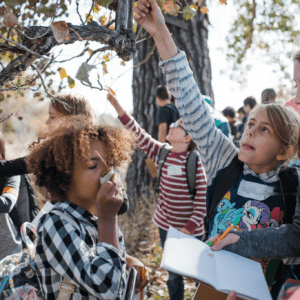
ANTS is a grade-specific, standards-aligned environmental education program that combines science learning with Montana’s Indian Education for All (IEFA) principles. Through classroom lessons, outdoor investigations, and place-based learning experiences, students explore local ecosystems, wildlife, cultural connections to the land, and the scientific processes that help us better understand our environment. The program is designed to be responsive to both the landscapes and cultures that make Montana unique.
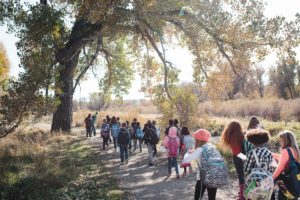
Throughout the school year, participating classes engaged in 12–19 hours of direct instruction and outdoor exploration. Students investigated topics ranging from watershed ecology and wildlife adaptations to plant communities and the interconnected relationships that sustain healthy ecosystems. By combining classroom learning with outdoor experiences, ANTS helps students build scientific knowledge, critical thinking skills, and a deeper sense of stewardship for the natural world.
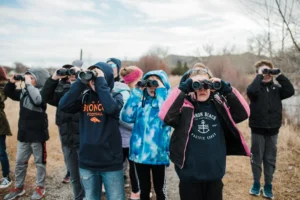
A key component of the program’s success is our partnership with the local Bureau of Land Management (BLM) and Montana’s Indian Education for All (IEFA) initiative. Together, these partnerships help bring learning to life by connecting students with the landscapes, histories, and cultures that shape our region. Through field experiences on nearby public lands, students have the opportunity to explore native habitats firsthand, investigate ecological processes in real-world settings, and develop a greater understanding of the role public lands play in conservation, recreation, and community well-being. Guided by IEFA principles, students also deepen their understanding of Indigenous perspectives, traditional ecological knowledge, and the enduring relationships between people and place. For many students, these experiences provide meaningful connections to landscapes they may never have visited, transforming textbook concepts into memorable discoveries while fostering a deeper appreciation for Montana’s natural and cultural heritage.
The program’s growth reflects rising demand from schools for meaningful, place-based environmental education. Teachers consistently report that ANTS strengthens classroom learning while providing students with opportunities to engage directly with the landscapes, wildlife, and natural resources that shape their communities.
This success would not be possible without the generous support of our funding partners. Direct support from the Fortin Family Foundation, Montana Indian Education for All, Montana Bureau of Land Management, the Harry L. Willett Foundation, and the Yellowstone River Parks Association helps keep participation costs low for schools and families. We are also grateful for our continued partnership with the Bureau of Land Management, which helps provide access to public lands and enriches students’ educational experiences throughout the region. Together, these partnerships ensure that students—regardless of location or financial circumstances—can access high-quality nature education experiences.
As we reflect on this record-breaking year, we are grateful to the teachers, students, schools, volunteers, and supporters who make this program possible. Together, we are helping the next generation develop a stronger connection to the land, a deeper understanding of science, and the skills needed to become thoughtful stewards of Montana’s natural heritage.
Thank you for helping make this our most impactful ANTS season yet. We look forward to welcoming even more students into the program next year.