CARES Program Wraps Up a Successful Year and Looks Ahead to Summer Conservation Opportunities
Reflecting on a Successful Season and Launching Summer CARES 2026
The 2025–26 Conservation and Research Experiences (CARES) program has come to a close after another impactful year of hands-on conservation, scientific research, and career exploration for local high school students.
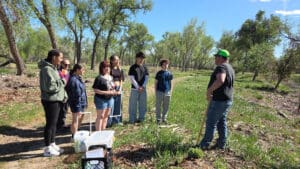
West High with Caleb Music, Yellowstone County Weed District.
This year, students investigated some of Montana’s most pressing environmental challenges, including pollinator conservation, invasive species management, and habitat health. The program began in the fall at the Montana Audubon Center, where students received training in the Bumble Bee Atlas and pollinator monitoring protocols. They then applied those skills during surveys at John H. Dover Memorial Park, contributing data to community science efforts while learning about local restoration initiatives from Carolyn Sevier, Executive Director of the Yellowstone River Parks Association.
Midway through the CARES season, students had the opportunity to share their research and learning at the STEM Symposium at Montana State University Billings. West High School environmental science and biology students proudly showcased their findings through research posters, podcasts, and original artwork. The symposium allowed students to share their findings and emerging insights with peers, educators, and community members, while highlighting the important role young people play in conservation science and environmental stewardship.
The program concluded with a field experience at Two Moon Park, where students surveyed for and removed invasive common buckthorn while learning about the park’s history and significance from Anthony Sammartano, the park’s caretaker. Along the way, they explored the impacts of invasive species on ecosystems, practiced field-monitoring techniques, and contributed observations to iNaturalist. Students also had the opportunity to explore the habitats and wildlife that make Two Moon Park a treasured natural area within our community.
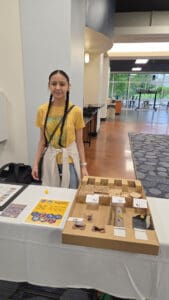
STEM Symposium Display
A special thank you goes to Erin Hall of Billings West High School for her support and valuable input in developing this program.
Additional thanks to Caleb Music of the Yellowstone County Weed District and Megan Hoyer, Invasive Species Education Coordinator with the Montana Department of Agriculture, for providing field instruction, professional expertise, and insight into conservation careers.
We also thank Elaine Westbrook, Austin Bennett, and the undergraduate mentors of Montana State University, Billings, for supporting the STEM Symposium and creating opportunities for students to share their research with the broader community. Through their mentorship, students learned how to conduct literature-based research, evaluate scientific information, and communicate their findings through posters, podcasts, and artwork. Their guidance helped students strengthen both their scientific understanding and their ability to share conservation concepts with diverse audiences.
Most importantly, thank you to the students, teachers, partners, and volunteers whose enthusiasm and commitment made this year’s CARES program such a success. Together, we are helping cultivate the next generation of conservation leaders.
Looking Ahead: Summer CARES Expands Conservation Research Opportunities
While the school-year program may be ending, the learning doesn’t stop this summer.
Thanks to support from the Montana Noxious Weed Trust Fund, the Montana Audubon Center is excited to offer a two-week Summer CARES program from July 6–17 for high school and middle school students interested in conservation, ecology, and field research.
Building on the success of previous STEM education initiatives, this immersive program will engage students in hands-on conservation projects aligned with the goals of the Montana Weed Management Plan while exploring broader ecosystem health. Participants will develop field skills in vegetation monitoring, noxious weed identification and management, bumble bee surveys, bird surveys, habitat assessment, and community science data collection. Students will work alongside conservation professionals to better understand the connections between native habitats, pollinators, wildlife, and invasive species management.
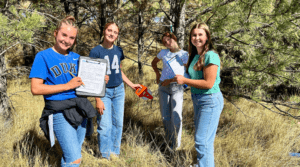
West High students doing vegetation surveys
The program is made possible through a collaborative partnership that includes:
- Yellowstone County Weed District, with Caleb Music.
- Montana Fish, Wildlife & Parks, with Jessica Goosman.
- Montana Department of Agriculture, with Megan Hoyer.
Through hands-on field experiences, scientific investigation, and mentorship from professionals working in conservation, Summer CARES offers students a unique opportunity to develop real-world research skills while making meaningful contributions to Montana’s landscapes. Whether conducting bumble bee surveys, monitoring vegetation, identifying birds, or helping manage invasive species, participants will gain valuable experience while exploring future career pathways in natural resources and environmental science.
Space is limited, and interested high school and middle school students are encouraged to apply by June 25. For registration information and program details, visit our website center.mtaudubon.org. We look forward to another summer of discovery, stewardship, and conservation action.